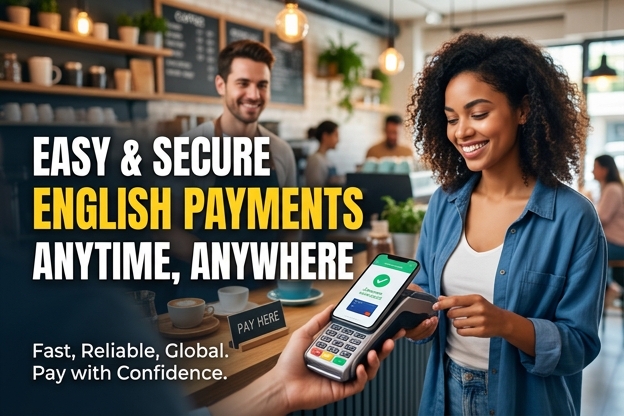
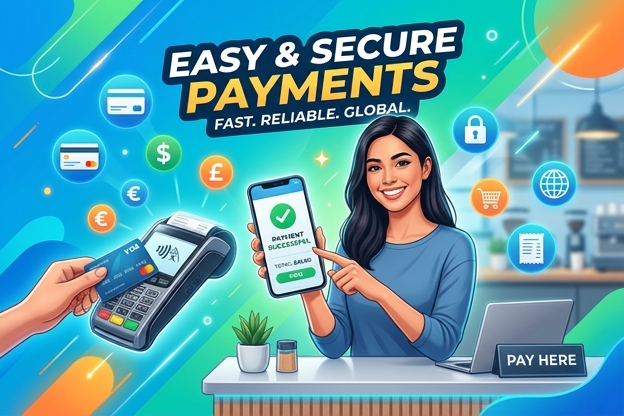
Learn how the emoney app works, including key features, fees, security, and setup steps. This guide explains costs, risks, business use cases, and smart tips to help you choose the right payment solution for faster, safer digital transactions
Why the emoney app Matters for Modern Payments
If you are comparing digital wallets, cross-border payment tools, or mobile money platforms, the phrase emoney app: Features, Fees, Security & How to Get Started usually points to the questions that actually affect your decision: what it does well, what it costs, how safe it is, and whether setup is easy enough for daily use. Those are not small details. A slick interface means very little if transfer fees pile up, settlement takes too long, or account verification becomes a bottleneck.
At Crypto Merchant Accounts, we spend a lot of time helping merchants, startups, and digital-first businesses evaluate payment tools that sit between customers, banks, and alternative payment rails. The emoney app enters that conversation because users want speed and flexibility, while businesses want predictable costs, compliance, and fewer payment failures.
An emoney app is a digital payment application that lets users store, send, receive, or manage electronic money through a mobile device or web account. In practical terms, it functions like a wallet or payment hub, often combining transfers, bill pay, card support, account top-ups, and transaction tracking in one place.
For consumers, it can replace parts of traditional banking behavior. For businesses, it can reduce friction at checkout, support remote payments, and widen access to customers who prefer app-based transactions over cards or bank wires.
Table of Contents
- What the emoney app is and who it serves
- Core features users should expect
- Fees, pricing models, and hidden costs
- Security controls, compliance, and fraud protection
- How to get started with the emoney app
- Best business and consumer use cases
- Advantages, limitations, and trade-offs
- How app-based e-money compares with other payment options
- Expert perspective and real-world lessons
What the emoney app is and who it serves
The emoney app generally fits into the broader category of regulated electronic money and digital wallet services. Depending on the provider, it may support peer-to-peer transfers, merchant payments, account funding, card issuance, withdrawals, international remittance, and even business payment acceptance. That flexibility is exactly why users get interested in it quickly.
Still, not every user is looking for the same thing. A freelancer may want faster client payments. An online merchant may care more about lower acceptance costs and mobile-first checkout. A traveler may just want to avoid poor FX rates. The app experience can look similar on the surface while solving very different financial problems underneath.
According to the Worldpay Global Payments Report released in 2024, digital wallets continue to account for a growing share of global e-commerce payments, reinforcing how strongly consumer behavior has shifted toward app-led payment flows. That trend matters because users now expect financial tools to be immediate, mobile, and transparent.
In our work at Crypto Merchant Accounts, we usually separate emoney app users into three broad groups:
- Consumers who want speed, convenience, and simple money movement
- Small businesses that need lower-friction collections and easier reconciliation
- Digital merchants that want wallet-style payment acceptance alongside cards, ACH, or crypto-friendly payment infrastructure
Core features users should expect
The strongest emoney apps tend to win on utility, not branding. If the product cannot handle routine payment behavior without friction, users leave fast. The most useful apps typically include a mix of the following features.
Wallet funding and balance management
Most users expect to add money through a bank transfer, debit card, linked account, or another wallet. A good app makes funding fast and clearly shows pending versus available balance. That sounds basic, but poor balance visibility is one of the most common causes of failed transactions and support complaints.
Peer-to-peer transfers
Sending money to another user should be nearly instant, with a clear record of recipient details, timestamps, fees, and status updates. If the transfer flow is clumsy, the app loses one of its main advantages over legacy banking.
Merchant payments and bill pay
For business users, the app becomes more valuable when it supports invoices, QR code acceptance, online checkout, recurring billing, or utility payments. This is where consumer convenience turns into a real commercial tool.
Transaction history and controls
Users need searchable records, downloadable statements, spending categories, and dispute reporting. Finance apps that hide the details create distrust, especially when payments are delayed or reversed.
Notifications and risk alerts
Real-time push alerts for logins, transfers, top-ups, withdrawals, and unusual activity are now standard. They do not just improve experience; they reduce fraud exposure by helping users act quickly.
“The most trusted payment apps make the invisible visible. Users should never have to guess where their money is, what they paid in fees, or why a transaction was flagged.”
Fees, pricing models, and hidden costs
Fees are where many users make the wrong choice. An app can look cheap because there is no monthly subscription, but the actual expense shows up through transfer spreads, cash-out charges, card funding costs, inactivity fees, or FX markups. The right way to evaluate pricing is to follow your most common transaction path from beginning to end.
Common fee categories
You will usually encounter some combination of these charges:
- Account funding fees for topping up via card or expedited transfer
- Withdrawal fees when moving money to a bank or card
- Merchant acceptance fees for receiving customer payments
- Foreign exchange spreads on international transfers or multi-currency conversion
- Chargeback or dispute fees for merchants
- Dormancy or maintenance fees in less user-friendly programs
Where users usually overpay
The biggest pricing mistakes often come from convenience decisions. Funding by debit card may be faster than ACH, but more expensive. Instant withdrawal may be useful in a cash crunch, but repeated use can erase any savings the app promised in the first place. International users often focus on the visible send fee while missing the exchange-rate markup.
According to the Federal Reserve’s more recent digital payments research and faster payments commentary through 2024, users increasingly value speed, but willingness to pay for speed falls sharply when costs are inconsistent or unclear. That lines up with what we see in practice: users will pay for certainty once, but not repeatedly for ambiguity.
A practical pricing mindset
When reviewing an emoney app, ask three things:
- What does it cost to put money in?
- What does it cost to move money out?
- What does it cost to convert or dispute a payment?
If those answers are hard to find, the total cost of ownership is probably higher than it appears.
Security controls, compliance, and fraud protection
Security is not just about encryption claims on a landing page. For an emoney app, real security sits at the intersection of account authentication, transaction monitoring, licensing, data handling, and customer support responsiveness. If one of those layers is weak, the whole user experience becomes fragile.
What strong security looks like
A trustworthy app should offer multi-factor authentication, device recognition, suspicious login alerts, transfer confirmation prompts, session management, and account recovery protections. It should also explain whether client funds are safeguarded or segregated in line with the regulatory framework that governs the provider.
From a merchant angle, fraud tooling matters just as much as user login safety. Velocity checks, transaction scoring, geolocation checks, dispute workflows, and sanctions screening all affect how well the app performs in real payment environments.
Regulation and safeguarding
Electronic money providers often operate under e-money or payment institution rules, depending on jurisdiction. That does not make every app equal. Some are fully regulated with robust safeguarding requirements, while others rely on partner-bank structures or narrower permissions. Users should verify licensing status, complaint channels, and where funds are actually held.
Verizon’s 2024 Data Breach Investigations Report continued to show that credential abuse and social engineering remain major drivers of account compromise. For payment apps, that means user education is part of security, not a side note.
“Fraud prevention is strongest when security controls are built into normal behavior. The safest apps make secure actions feel routine instead of burdensome.”
How to get started with the emoney app
Setup is usually simple, but the quality of onboarding matters. A smooth registration flow builds confidence. A confusing identity verification process creates abandonment fast. Here is the cleanest way to begin.
Typical onboarding path
- Download the official app from the Apple App Store, Google Play, or the provider’s verified site
- Create an account using your legal name, mobile number, and email address
- Verify identity by submitting the requested documents and sometimes a selfie check
- Link a funding source such as a bank account, debit card, or supported transfer rail
- Review limits and fees before making your first transfer or payment
- Turn on security settings like MFA, passcodes, biometric login, and notifications
- Start with a small transaction to confirm speed, fee accuracy, and recipient workflow
What new users should verify right away
Do not wait until a payment problem happens. Check your daily limits, withdrawal timing, transfer reversibility, customer support channels, and dispute windows on day one. If you are using the app for business, verify settlement times and reporting exports before routing meaningful volume through it.
I have personally seen merchants rush through onboarding because the app looked easy, then hit preventable delays once customer payments started landing. At Crypto Merchant Accounts, we once worked with a digital subscription seller that adopted an app-based payout flow for speed. The first test went well, but their finance team had skipped reviewing withdrawal thresholds and verification tiers. When weekly volume increased, account limits triggered manual review and delayed payroll-linked disbursements. We rebuilt the flow with a documented limit map, backup rails, and a staged volume ramp. After that, settlement became predictable.
In another case, I helped a small online service business compare an emoney app against traditional processor payouts. The app won on speed for low-ticket collections, but only after we identified the real operational issue: not fees alone, but the gap between receipt of funds and usable funds. That distinction matters more than many users realize.
Best business and consumer use cases
The emoney app makes the most sense when speed, accessibility, and mobile behavior are central to the transaction. It is less compelling when your workflow depends on large-ticket bank wires, highly customized treasury controls, or complex B2B approval chains.
Where it tends to perform well
- Freelancer and creator payments where users need quick access to earnings
- Small retail and service businesses that benefit from simple mobile acceptance
- Cross-border family transfers when supported corridors are competitive
- Event, delivery, and field-service payments where on-the-go collection matters
- Digital commerce when customers prefer wallet-based checkout over typing card details
Where caution is warranted
Apps can be less suitable for high-risk merchants, heavily regulated sectors, enterprise-level AP workflows, or users who frequently handle very large balances. In those cases, safeguards, account reviews, or transfer limits can create friction that a more specialized payment stack would handle better.
Advantages, limitations, and trade-offs
No payment tool is perfect. The emoney app can be excellent for one payment path and weak for another. The right decision comes from trade-offs, not slogans.
Key advantages
For many users, the app’s main strengths are speed, convenience, and a cleaner user experience than legacy banking tools. It can lower friction for onboarding, improve transfer visibility, and reduce the time between payment initiation and usable funds. For merchants, that can translate into better cash flow and fewer dropped transactions.
Real limitations
The weak points usually include limits on withdrawals, inconsistent support quality, regional restrictions, funding method constraints, and fee complexity around premium or expedited features. Some users also assume app balances carry the same protections as traditional bank deposits in every context, which is not always true.
That is why balanced evaluation matters. Fast onboarding means little if compliance reviews freeze activity later. Cheap domestic transfers may not mean cheap international conversion. Good app ratings also do not always predict good support for edge cases.
How app-based e-money compares with other payment options
| Payment Option | Best For | Typical Cost Pattern | Main Trade-Off |
|---|---|---|---|
| Emoney app | Mobile transfers, wallet payments, fast small-business collections | Low to moderate, but can rise with instant cash-out or FX | Limits, verification tiers, and support quality vary widely |
| Traditional bank transfer | Large domestic payments, payroll, formal B2B transfers | Usually predictable, sometimes slow | Less flexible and slower user experience |
| Card processor | E-commerce, recurring billing, card-not-present sales | Merchant discount rates plus dispute costs | Chargebacks and higher acceptance costs |
| Digital wallet at checkout | Consumer retail, quick online checkout, mobile commerce | Often bundled into merchant processing fees | Dependent on wallet adoption by target customers |
| Crypto payment rail | Global reach, alternative settlement, certain high-friction sectors | Can be efficient, depends on conversion and provider model | Compliance, volatility management, and user familiarity |
Expert perspective and real-world lessons
At Crypto Merchant Accounts, we do not treat emoney apps as isolated products. We look at them as one layer in a broader payment stack. That matters because a merchant may love the app for front-end collection while still needing a more robust back-end setup for reconciliation, reserves, accounting exports, or alternative settlement methods.
One lesson I keep returning to is this: users rarely leave because a payment app has one fee. They leave because the fee structure breaks trust. If onboarding promises simplicity but real usage reveals exceptions, delays, and surprise costs, churn follows quickly.
Another lesson is that the best-performing payment setups are rarely single-channel. A business may use an emoney app for fast customer acceptance, ACH for low-cost domestic transfers, cards for standard checkout, and specialized merchant services for higher-risk volume. That kind of layered approach gives resilience.
According to PYMNTS and other payments research published through 2024, consumers increasingly reward convenience but still rank security and transparency among the top decision drivers. That balance explains why the strongest emoney apps are not merely fast. They are clear.
Conclusion
The right take on emoney app: Features, Fees, Security & How to Get Started is simple: the app can be a strong payment tool when it combines practical features, transparent pricing, reliable security, and a realistic onboarding process. It is most useful when your payment habits are mobile-first, frequent, and speed-sensitive. It becomes less attractive when your needs are large-ticket, highly regulated, or operationally complex.
Crypto Merchant Accounts recommends three next steps before you commit:
- Map your real payment flow from funding to withdrawal so you can measure the true fee impact
- Test security and support early with a small transaction and a non-urgent support request
- Build a backup payment rail if you plan to use the app for business-critical collections or payouts
References
- Worldpay Global Payments Report 2024 — Provided current context on the growth of digital wallets in global e-commerce.
- Federal Reserve payments research and faster payments commentary, 2023-2024 — Informed discussion on payment speed, user expectations, and cost sensitivity.
- Verizon 2024 Data Breach Investigations Report — Supported points about credential abuse, account compromise, and the importance of layered security.
- PYMNTS payments research, 2024 — Reinforced how users weigh convenience, transparency, and trust in digital payment adoption.
FAQ
What is an emoney app used for?
An emoney app is typically used to store electronic value, send and receive money, pay merchants, fund an account, track transactions, and sometimes handle bill payments or international transfers from a mobile device.
Is the emoney app safe to use?
It can be safe if the provider uses multi-factor authentication, transaction monitoring, account alerts, and strong identity verification. You should also check the provider’s licensing status, fund safeguarding model, and customer support quality before keeping a large balance in the app.
What fees should I check before signing up?
Review account funding fees, withdrawal fees, instant transfer charges, merchant acceptance fees, dispute fees, and any foreign exchange markup. The visible send fee is only one part of the true cost.
How do I get started with an emoney app?
Start by downloading the official app, creating an account, completing identity verification, linking a funding source, enabling security settings, and running a small test payment before using it for larger or business-critical transactions.
Is emoney app: Features, Fees, Security & How to Get Started relevant for businesses too?
Yes. Businesses can use an emoney app for mobile collections, quick customer payments, simplified wallet-based transactions, and faster access to funds. The fit depends on transaction volume, settlement needs, compliance profile, and reporting requirements.
Can an emoney app replace a regular bank account?
For some daily payment tasks, yes. For full financial management, not always. Many users still need a bank account for larger transfers, broader account protections, lending products, or more advanced treasury features.