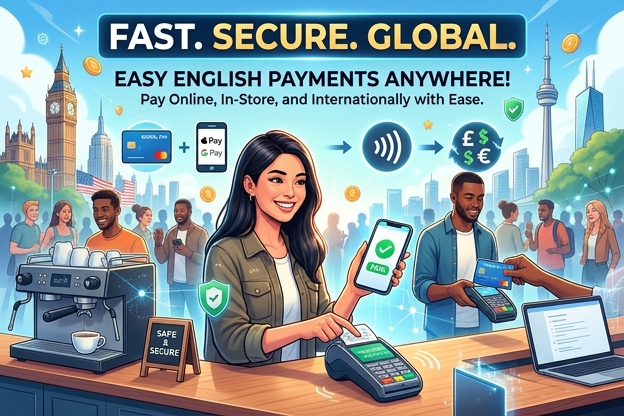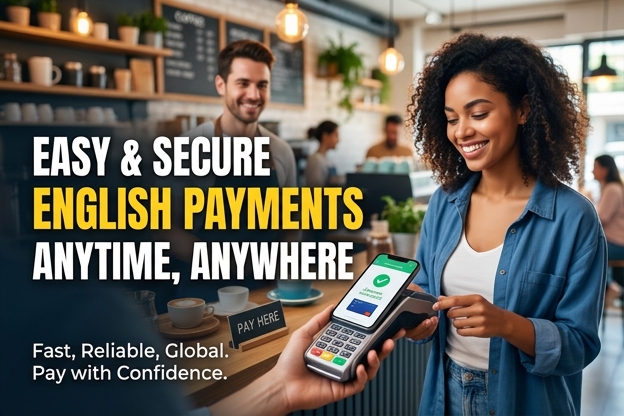
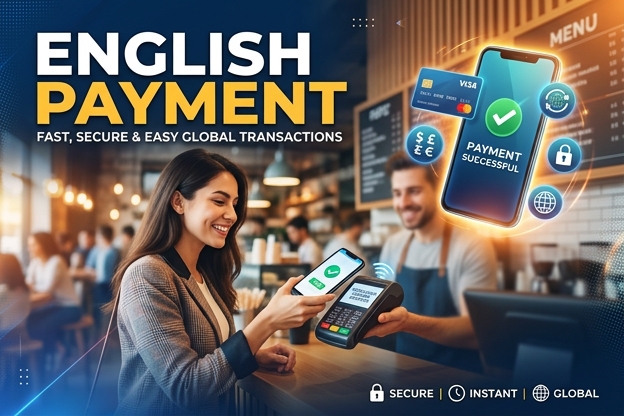
Learn retail payment solution best practices for secure, seamless checkout, fraud reduction, better approvals, and stronger customer trust with expert insights
Why Retailers Need a Smarter Checkout Strategy
Retail Payment Solution: Best Practices for Secure and Seamless Checkout is no longer a niche topic for payment teams alone. It is a revenue issue, a trust issue, and often the difference between a completed sale and an abandoned cart. Whether you run a brick-and-mortar chain, an ecommerce store, or an omnichannel brand, customers expect checkout to feel instant, secure, and invisible.
That pressure has only increased as fraud tactics get sharper and customer patience gets shorter. Crypto Merchant Accounts has worked with merchants facing exactly this gap: checkout systems that technically function, but still create friction, false declines, chargeback exposure, and fragmented reporting across channels.
A retail payment solution is the combination of payment technology, security controls, processing infrastructure, and customer experience design used to accept and manage transactions. The best retail payment solutions reduce friction for legitimate buyers while blocking fraud, supporting compliance, and giving merchants operational visibility.
When retailers get this right, they typically see stronger conversion, fewer disputes, cleaner reconciliation, and better customer retention. When they get it wrong, even small issues such as slow authorization, weak tokenization, or limited wallet support can quietly erode margin every day.
Table of Contents
- What Makes a Great Retail Payment Solution
- Building Security Into Every Transaction
- Designing a Seamless Checkout Experience
- Choosing the Right Payment Mix for Your Retail Model
- Implementation Playbook for Retail Teams
- Real-World Results From the Field
- Risks, Tradeoffs, and Common Mistakes
- Future Trends Shaping Retail Payments
- Final Thoughts and Next Actions
What Makes a Great Retail Payment Solution
A strong retail payment solution does more than process cards. It connects fraud controls, alternative payment methods, POS and ecommerce systems, reporting, settlement, and compliance into one operating layer that supports growth. Retailers often focus first on rates, but the real performance drivers usually sit elsewhere: approval rates, checkout speed, dispute management, and adaptability across channels.
According to the National Retail Federation, fraud and operational friction remain among the top pressures on merchants navigating blended physical and digital commerce. At the same time, a 2024 Baymard Institute analysis continued to show that checkout friction is a major source of cart abandonment. That means payment strategy now affects both top-line and bottom-line performance.
The best solutions typically share a few traits:
- Support for cards, mobile wallets, ACH, and regionally relevant payment methods
- Tokenization and encryption that reduce exposure to sensitive payment data
- Fraud tools that use risk signals without overblocking real customers
- Fast authorizations and retry logic that protect conversion
- Clear reporting for finance, operations, and customer support teams
- Scalability across in-store, online, subscription, and cross-border flows
If your processor cannot help you improve approvals, lower false declines, and simplify reconciliation, it may be processing payments without actually solving your payment problem.
Building Security Into Every Transaction
Security is where many retail strategies either become resilient or expensive. PCI DSS compliance still matters, but compliance alone is not a fraud strategy. Modern retailers need layered protection that covers card-present and card-not-present environments, employee misuse, account takeover, refund abuse, and synthetic identity attacks.
According to Verizon’s 2024 Payment Security Report, organizations that consistently validate and maintain payment security controls are better positioned to reduce payment ecosystem risk over time. In plain terms, security works best when it is operational, not just documented.
Core controls retailers should prioritize
These controls have the highest practical value for most merchants:
- Point-to-point encryption for in-store card capture
- Network tokenization and card-on-file tokenization for repeat customers
- Address verification, CVV checks, and velocity rules
- Device fingerprinting and behavioral analytics for ecommerce sessions
- Role-based access controls for refunds, voids, and settlement changes
- Chargeback alerts and evidence workflows integrated into operations
“Retail payments are at their best when security is largely invisible to good customers and highly visible to bad actors.”
One overlooked issue is refund security. Many retailers harden checkout but leave refund workflows loose, which creates a backdoor for abuse. Tight approval paths, staff permissions, and refund analytics can prevent losses that never show up in standard payment dashboards.

Designing a Seamless Checkout Experience
Customers do not separate payment security from payment experience. They simply feel the result. If checkout asks for too much, loads too slowly, rejects a valid card, or forces account creation, trust falls fast.
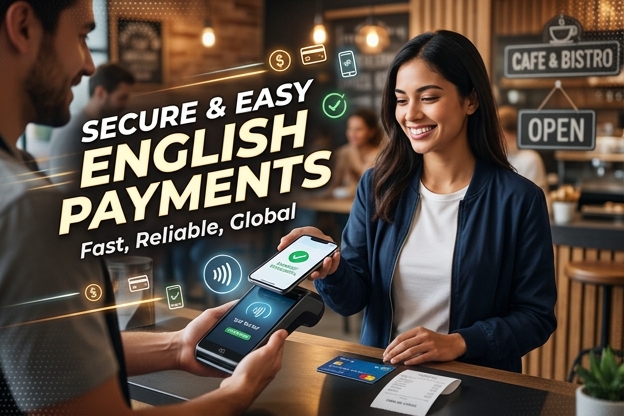
Seamless checkout means reducing effort at each moment of payment. That includes fewer fields, clearer error messages, smart wallet placement, saved payment options, and consistent design between cart, payment, and confirmation pages. In-store, it means quick terminal response times, tap-to-pay reliability, and staff who can recover from payment errors without escalating tension.
Elements that reduce friction without lowering standards
Retailers should focus on balancing speed and control:
- Enable Apple Pay, Google Pay, and other wallet options where customer adoption is strong
- Use guest checkout for first-time buyers
- Offer local payment methods for cross-border traffic
- Prefill returning customer details using secure tokenized profiles
- Show trust signals near the pay button, not buried in the footer
- Keep decline messages helpful but not overly specific for fraud scenarios
According to Adobe’s digital commerce reporting in 2024, mobile remains a massive share of browsing activity, but conversion still lags desktop in many sectors. Payment friction is one major reason. A checkout flow that feels acceptable on desktop can feel punishing on a phone.
“Every extra second and every extra form field taxes conversion. Payment design should be treated like merchandising: tested, measured, and improved continuously.”
Choosing the Right Payment Mix for Your Retail Model
Not every retail business needs the same stack. A luxury ecommerce brand, a convenience chain, a subscription retailer, and a marketplace seller all face different risk profiles, average order values, and customer expectations. Your payment mix should fit your business model rather than follow generic industry advice.
| Retail Scenario | Best-Fit Payment Methods | Primary Security Focus | Operational Priority |
|---|---|---|---|
| Fashion ecommerce brand | Cards, Apple Pay, Google Pay, BNPL | Account takeover and friendly fraud | Mobile conversion |
| Grocery or convenience chain | Tap-to-pay, debit, EBT where applicable | POS tampering and terminal uptime | Speed at lane |
| Subscription retail brand | Cards, ACH, digital wallets | Stored credential security and retry logic | Billing continuity |
| Cross-border DTC merchant | Cards, local APMs, multicurrency support | Fraud screening and regional compliance | Localized checkout |
Crypto-enabled acceptance may also fit specific segments, especially merchants serving international audiences or looking to widen payment access. The key is not to add methods for novelty. Add them where they lower friction, attract demand, or improve settlement flexibility.
Implementation Playbook for Retail Teams
Retailers often underestimate how much payment success depends on execution. A strong provider can still underperform if internal systems, policies, and testing are weak. The smartest rollouts treat payments as a cross-functional project touching ecommerce, store operations, finance, security, and customer support.
A practical rollout process
- Audit current performance by channel, including approval rates, chargebacks, refund timing, and abandonment.
- Map customer journeys for mobile, desktop, in-store, and repeat billing if applicable.
- Choose payment methods based on customer demand and business model, not trend pressure.
- Set security rules in phases so fraud protection can be tuned against real traffic.
- Test edge cases such as partial captures, split shipments, offline terminal recovery, and wallet failures.
- Train support and store staff on decline handling, refunds, and escalation paths.
- Review metrics weekly for the first 60 to 90 days and adjust quickly.
When I have worked on payment migrations, the biggest win rarely came from the launch itself. It came from the first two months of tuning. We saw merchants raise approvals simply by adjusting fraud thresholds, improving descriptor clarity, and cleaning up duplicate retry behavior that was quietly hurting issuer trust.
Real-World Results From the Field
At Crypto Merchant Accounts, we have seen the pattern repeatedly: a retailer thinks it has a checkout problem, but the root cause is actually payment architecture. One mid-sized online merchant came to us after a spike in abandoned carts and rising support tickets. Their existing setup offered basic card acceptance, but wallet support was weak, fraud rules were blunt, and reporting across channels was fragmented.
I worked directly with the team to restructure the flow around faster wallet presentation, cleaner tokenized repeat billing, and segmented fraud controls based on order value and customer history. Within weeks, they saw fewer false declines and a meaningful lift in successful authorizations. What stood out most was not just conversion. Their support burden dropped because customers stopped hitting confusing payment failures.
In another case, a specialty retailer with physical stores and an ecommerce site struggled with disconnected refund and reconciliation processes. Finance was spending too much time matching transactions across systems, while store managers had broad refund permissions that created risk. We helped tighten user roles, centralize reporting, and align online and in-store payment data. The merchant gained faster close cycles and stronger oversight without slowing down frontline teams.
These wins are rarely about one magic feature. They come from aligning technology, policy, and customer experience so the payment layer works as a business system rather than a standalone utility.
Risks, Tradeoffs, and Common Mistakes
No payment setup is perfect, and strong merchants stay realistic about tradeoffs. More payment methods can improve conversion, but they can also add complexity in settlement, support, and fraud handling. Aggressive fraud rules can lower loss rates, but they can also increase false declines. A single provider may simplify operations, but it can create concentration risk if uptime or flexibility becomes an issue.
Common mistakes that hurt retail performance
- Choosing providers based only on headline processing rates
- Ignoring mobile checkout behavior
- Leaving chargeback prevention as a reactive task
- Failing to align finance reporting with store and ecommerce operations
- Adding payment methods without a clear business case
- Treating fraud rules as set-and-forget
There are also regulatory and compliance considerations. PCI obligations, state privacy requirements, card network rules, and regional consumer protection standards all affect how payment data is collected, stored, and used. Retailers expanding internationally should assume complexity will rise, not fall.
A 2025 outlook from several payments and risk analysts has pointed to continued growth in AI-driven fraud attacks, especially around account takeover and synthetic identities. That means historical rule sets may become less effective unless they are paired with better identity and behavioral intelligence.
Future Trends Shaping Retail Payments
Retail payment systems are moving toward more orchestration, more tokenization, and more context-aware decisioning. Providers are getting better at routing transactions intelligently, using network tokens for lifecycle management, and applying machine learning to fraud without adding visible friction for trusted customers.
According to a 2024 report by Juniper Research, digital wallet usage and alternative payment adoption continue to expand globally, especially in mobile-heavy buying journeys. For retailers, that means checkout design should not assume cards are the only primary method, even if they still dominate total volume in many categories.
Another important trend is convergence. Retailers increasingly want one view of payments across online, in-store, subscription, social commerce, and international channels. The old model of separate systems for each environment creates blind spots that are expensive to manage.
Crypto Merchant Accounts also sees growing interest in flexible acceptance models that support broader customer choice while preserving security and compliance discipline. For the right merchant, payment optionality can support both acquisition and resilience.
Final Thoughts and Next Actions
The strongest retail payment strategy is not the one with the most features. It is the one that protects trust, supports fast checkout, improves approval quality, and gives your team control over risk and reporting. Retailers that treat payments as a strategic growth system tend to outperform those that treat them as a back-office necessity.
Crypto Merchant Accounts recommends three next actions:
- Run a payment performance audit across channels with special attention to false declines, mobile abandonment, and refund controls.
- Prioritize tokenization, wallet support, and role-based operational security before adding less critical features.
- Choose a payment partner that can help tune approvals, fraud settings, and reporting after launch, not just during setup.
References
- National Retail Federation — industry context on retail fraud, operational pressure, and evolving customer expectations.
- Baymard Institute 2024 checkout research — widely cited benchmarks on cart abandonment and checkout friction.
- Verizon 2024 Payment Security Report — practical findings on payment security validation and control maturity.
- Adobe digital commerce reporting 2024 — market signals on mobile commerce behavior and conversion trends.
- Juniper Research 2024 — projections and analysis related to digital wallets and alternative payment adoption.
FAQ
What is a retail payment solution?
-
A retail payment solution is the system a merchant uses to accept, authorize, secure, settle, and report customer payments across channels such as in-store, online, and mobile. It usually includes payment processing, fraud controls, tokenization, reporting tools, and support for methods like cards and digital wallets.
Why does checkout friction hurt retail conversion so much?
-
Friction creates doubt at the exact moment a buyer is ready to pay. Slow load times, too many form fields, missing wallet options, and unclear decline messages can cause customers to leave even when they intend to buy. Small delays often turn into meaningful revenue loss at scale.
How can retailers improve security without making checkout harder?
-
The best approach is layered security that works mostly in the background. Retailers should focus on:
Tokenization for stored payment credentials
Behavioral and device-based fraud signals
Role-based controls for refunds and voids
Smart fraud rules tuned to reduce false declines
What payment methods should most retailers offer?
-
Most retailers should at least support core card brands and major digital wallets. Depending on the model, many also benefit from:
ACH for recurring or higher-ticket payments
Buy now, pay later for eligible consumer segments
Local payment methods for international buyers
Tap-to-pay for fast in-store throughput
How often should a retailer review payment performance?
-
A healthy rule is weekly review during launches or changes, then monthly review once performance stabilizes. Key metrics include approval rate, false declines, cart abandonment, chargebacks, refund volume, settlement timing, and payment method mix by device and channel.
How do I evaluate Retail Payment Solution: Best Practices for Secure and Seamless Checkout for my business?
-
Start with your actual business needs rather than a generic checklist. Review:
Your channel mix: in-store, ecommerce, mobile, or subscription
Your fraud profile and dispute history
Your approval rates and false decline trends
Your need for wallets, local methods, or cross-border support
Your reporting, reconciliation, and finance workflow requirements
Can Crypto Merchant Accounts help with both security and customer experience?
-
Yes. Crypto Merchant Accounts focuses on helping merchants build payment setups that support secure processing, cleaner operations, and less friction at checkout. The strongest outcomes usually come from aligning payment methods, fraud controls, reporting, and customer flow instead of treating them as separate projects.